
Foil Printing & Embossing London
Three foil methods under one roof in central London. Toner foil on our Ricoh C7500. Hot foil over digital toner print. Traditional die stamping with the die. Same building since 1985. Email a file before 2pm for same-day collection from Mayfair or Camden.
Walk into either location with the file, or call straight through.
City Images, time after time, produces high-quality, immaculate products. Big shout out to Heather who is incredibly efficient, professional and executes to perfection. Thank you, City Images!
BBrian HatchThis is an excellent printing service. They clearly do big things too, but even for smaller projects like mine they're quick, efficient, accurate, and produce high quality output. The advice and support I received from Heather was exceptional.
RRichard WyattI worked with James on a branding installation project at MM Ilford. He managed all the client side interactions, community was quick and clear and the quality of materials were excellent. would highly recommend working with City Images
SShauna BlanchfieldExcellent service, great quality print. I highly recommend them for business and professional usage. Sherif was very thorough and provided a smooth experience. They indeed do provide same day print and delivery service in London.
MMia Khalid ShiblyA centrally located and professional print store, with huge and great quality printers regardless of the small storefront, fun and reliable staff, and an impeccable and fast service. They punch way above their weight - highly recommended!
GGergelyPerfect print on large sheet of antique mirror. We are so delighted with the final image - exceeded our expectations. Francisco (Chico) was super patient and knowledgeable and the price was good vale. Would definitely recommend.
EEmily AshWas attended to professionally at City Images by Heather with attention to detail all within 24 hours. Highly impressed with the way she handled the assignment and the personal touch given to the job. Will highly recommend City Images anytime.
TTokunbo KingProfessional and Reliable "From start to finish, the team was professional, friendly, and efficient. They kept me updated throughout the process, and the final product was delivered ahead of schedule. Exceptional service and reliability"
JJoana CabralFast, reliable and great quality. Been working with this company for a number of years now, the team is very responsive and helpful. Signage is always good quality and delivered in time. Wholeheartedly recommended!
GGoddard A-MAlways incredible service and quality from the team including Sherif, Francisco, and Heather. Highly recommended.
MMichael RobinsonCity Images, time after time, produces high-quality, immaculate products. Big shout out to Heather who is incredibly efficient, professional and executes to perfection. Thank you, City Images!
BBrian HatchThis is an excellent printing service. They clearly do big things too, but even for smaller projects like mine they're quick, efficient, accurate, and produce high quality output. The advice and support I received from Heather was exceptional.
RRichard WyattI worked with James on a branding installation project at MM Ilford. He managed all the client side interactions, community was quick and clear and the quality of materials were excellent. would highly recommend working with City Images
SShauna BlanchfieldExcellent service, great quality print. I highly recommend them for business and professional usage. Sherif was very thorough and provided a smooth experience. They indeed do provide same day print and delivery service in London.
MMia Khalid ShiblyA centrally located and professional print store, with huge and great quality printers regardless of the small storefront, fun and reliable staff, and an impeccable and fast service. They punch way above their weight - highly recommended!
GGergelyPerfect print on large sheet of antique mirror. We are so delighted with the final image - exceeded our expectations. Francisco (Chico) was super patient and knowledgeable and the price was good vale. Would definitely recommend.
EEmily AshWas attended to professionally at City Images by Heather with attention to detail all within 24 hours. Highly impressed with the way she handled the assignment and the personal touch given to the job. Will highly recommend City Images anytime.
TTokunbo KingProfessional and Reliable "From start to finish, the team was professional, friendly, and efficient. They kept me updated throughout the process, and the final product was delivered ahead of schedule. Exceptional service and reliability"
JJoana CabralFast, reliable and great quality. Been working with this company for a number of years now, the team is very responsive and helpful. Signage is always good quality and delivered in time. Wholeheartedly recommended!
GGoddard A-MAlways incredible service and quality from the team including Sherif, Francisco, and Heather. Highly recommended.
MMichael Robinson
Which foil job are you running?
Four common one-off foil jobs, four different specifications. We ask the run length, the stock, and the deadline, then we recommend digital, traditional, or a combination.
-
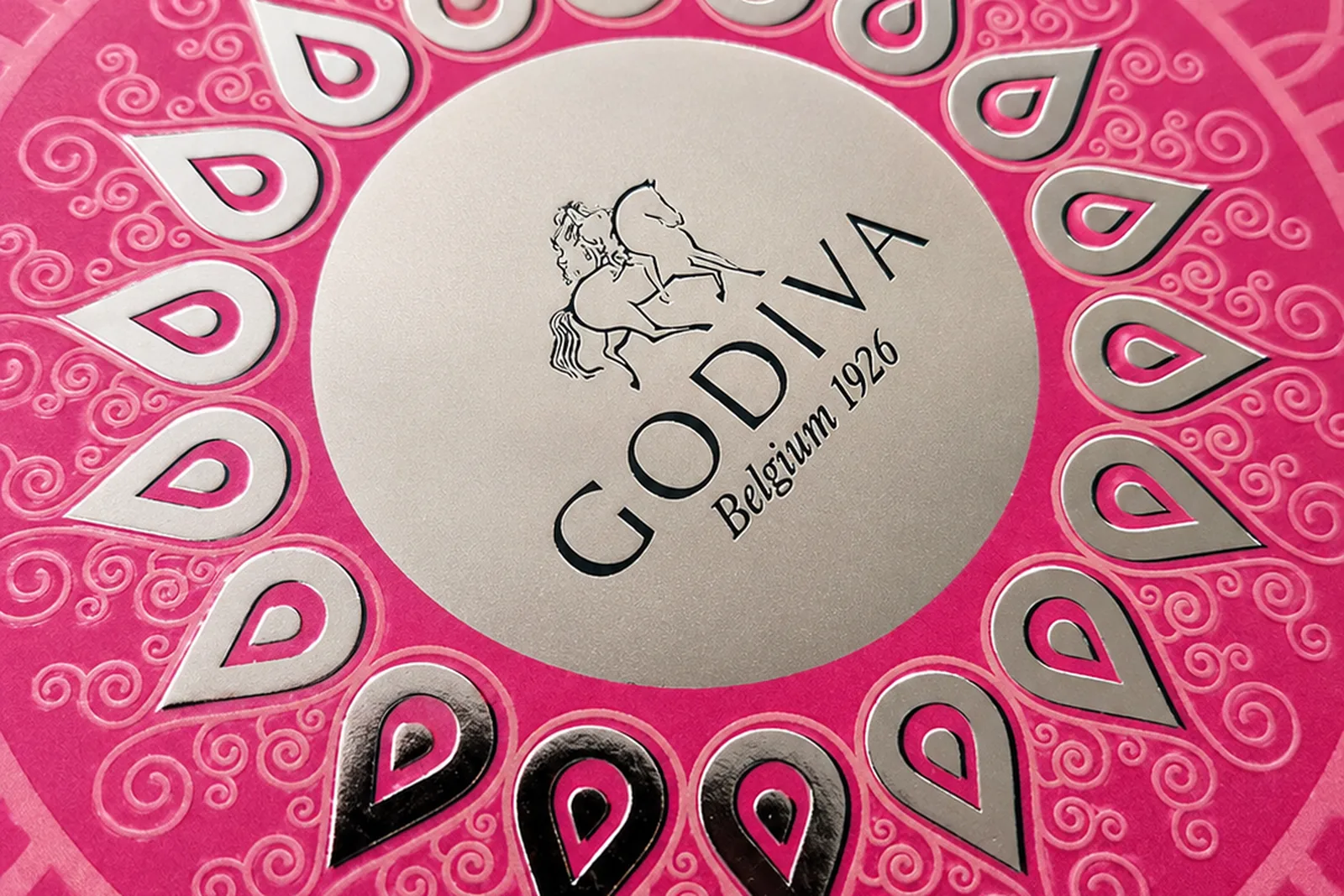
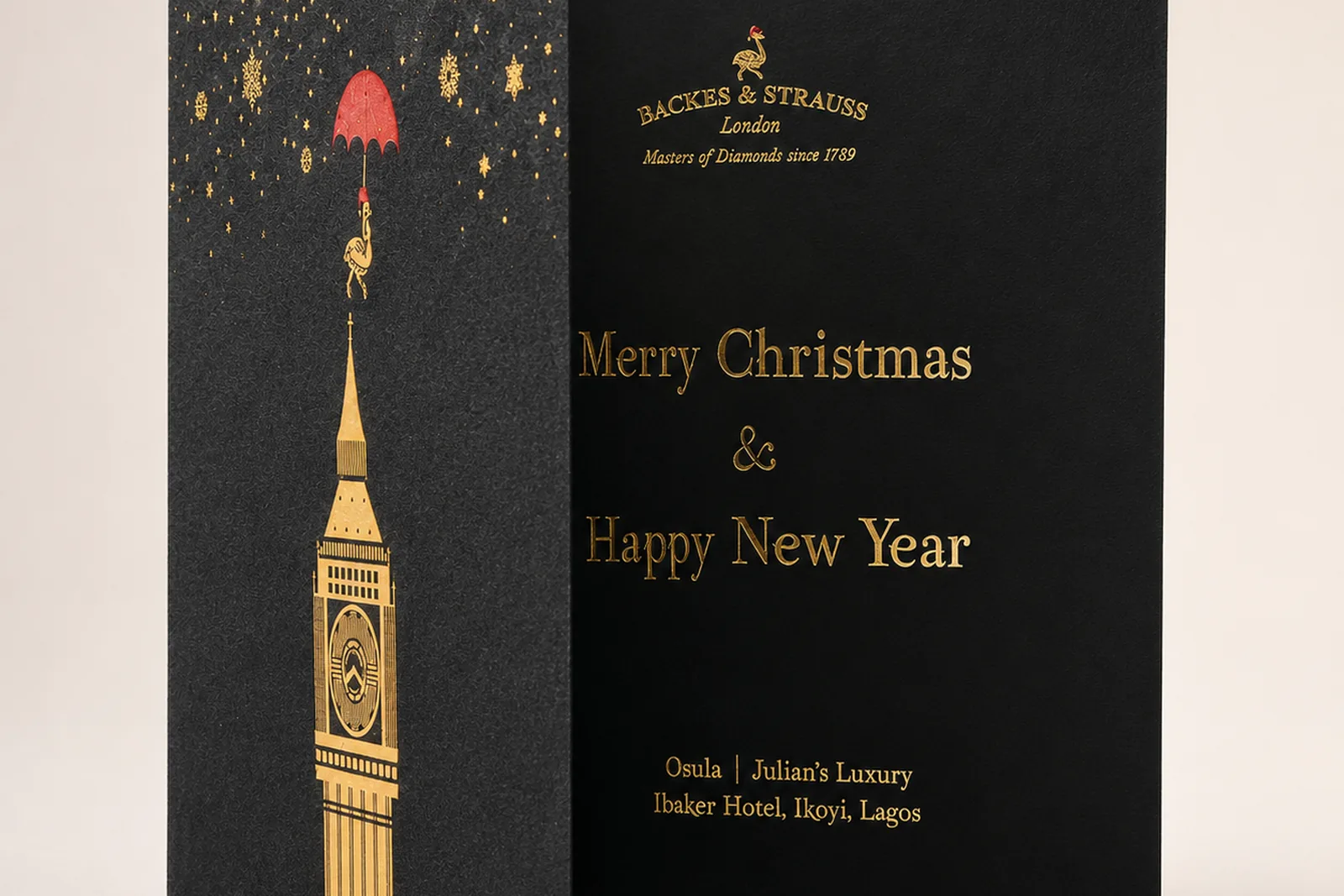
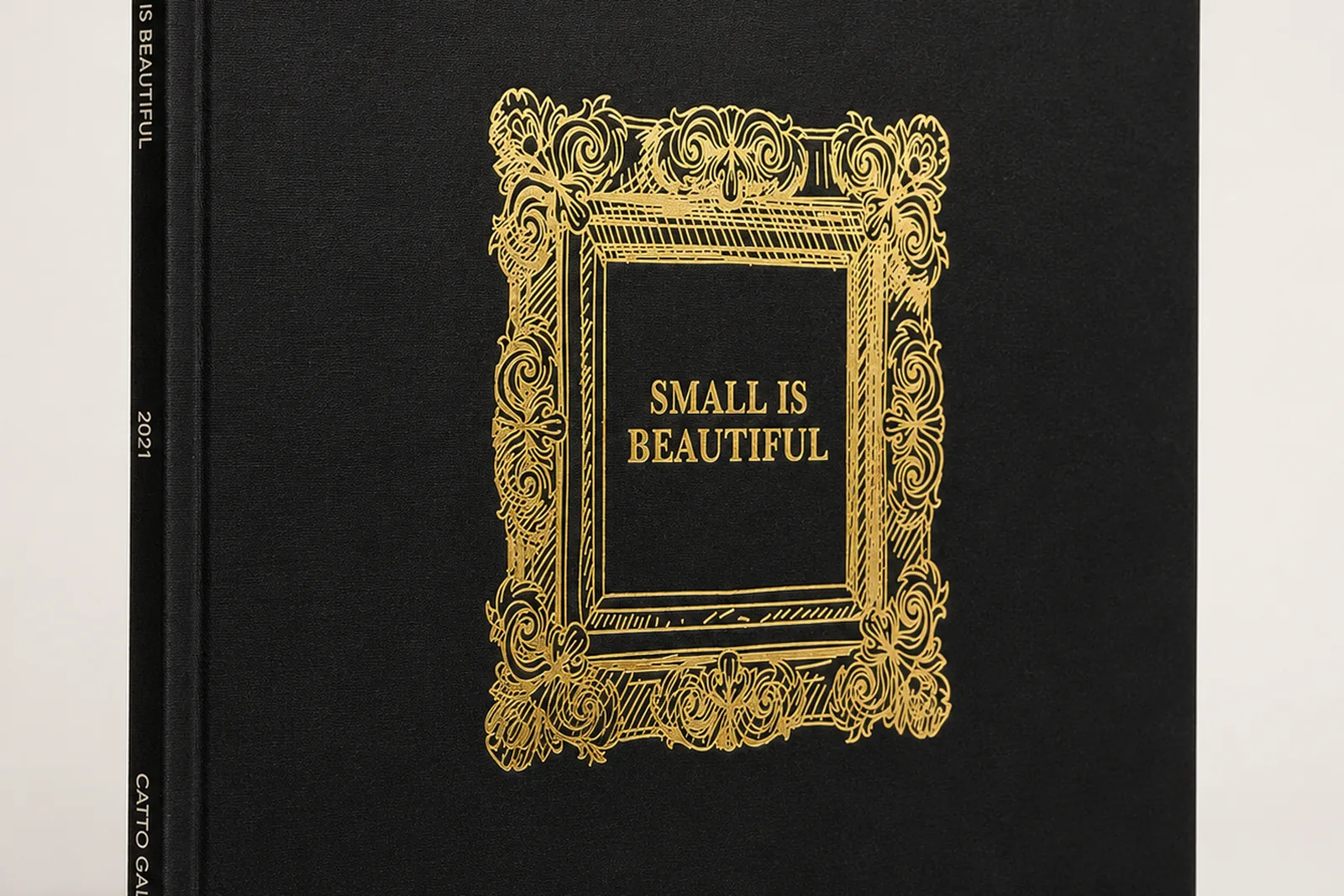
Luxury packaging is where foil earns its premium. We produce foil-stamped gift boxes, embossed cosmetic cartons, foil-finished swing tags, and metallic-printed sleeves for one-off product launches, limited-edition runs, and seasonal packaging. Heavier substrates hold the impression: 350gsm and above for boxes, 250gsm minimum for tags. We combine foil with embossing in a single production run, so a debossed logo filled with gold foil arrives as one finished piece. Pantone-matched foil colours, full-colour CMYK on the same sheet, and soft-touch laminate over the top all available together. Most foil blocking companies cannot run digital and traditional in one building; we run both on the Camden production floor.
-
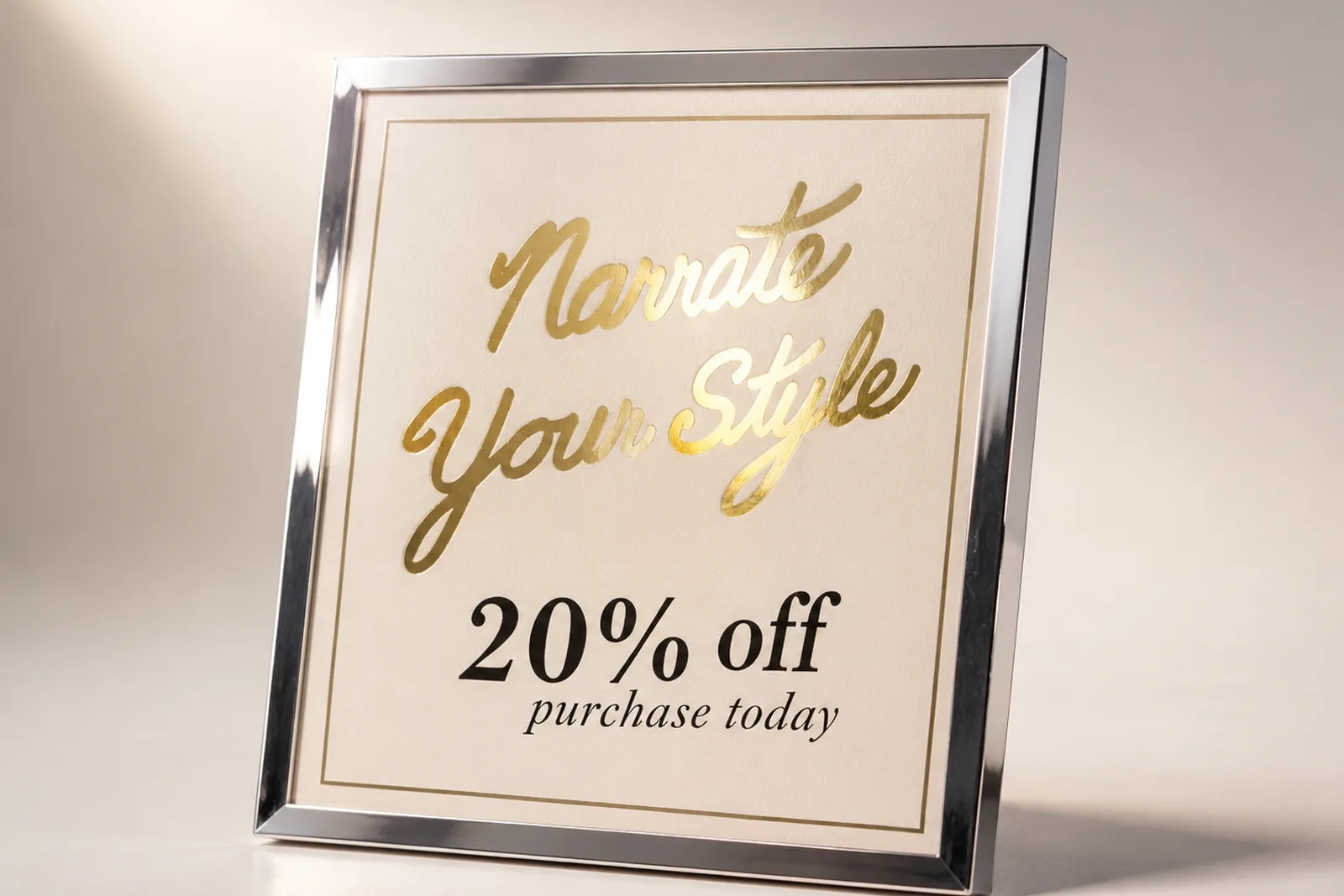
Foil on a pitch deck cover, a proposal binding, or a presentation folder is the cheapest way to make a one-off print job look considered. Same-day digital foil means a deck booked Wednesday morning lands Wednesday afternoon. No die, no minimum, no setup cost. We produce single-unit foiled proposals where the deal mattered more than the run length: foil-stamped covers on Colorplan, embossed brand marks on Mohawk Superfine, gold foil detail on Fedrigoni stock. Holographic and neon foil on the Ricoh C7500 give cheap options at low volume that traditional stamping cannot match. Combined with full-colour digital print on the same sheet, a foiled deck goes from artwork to finished piece in a few hours.
-
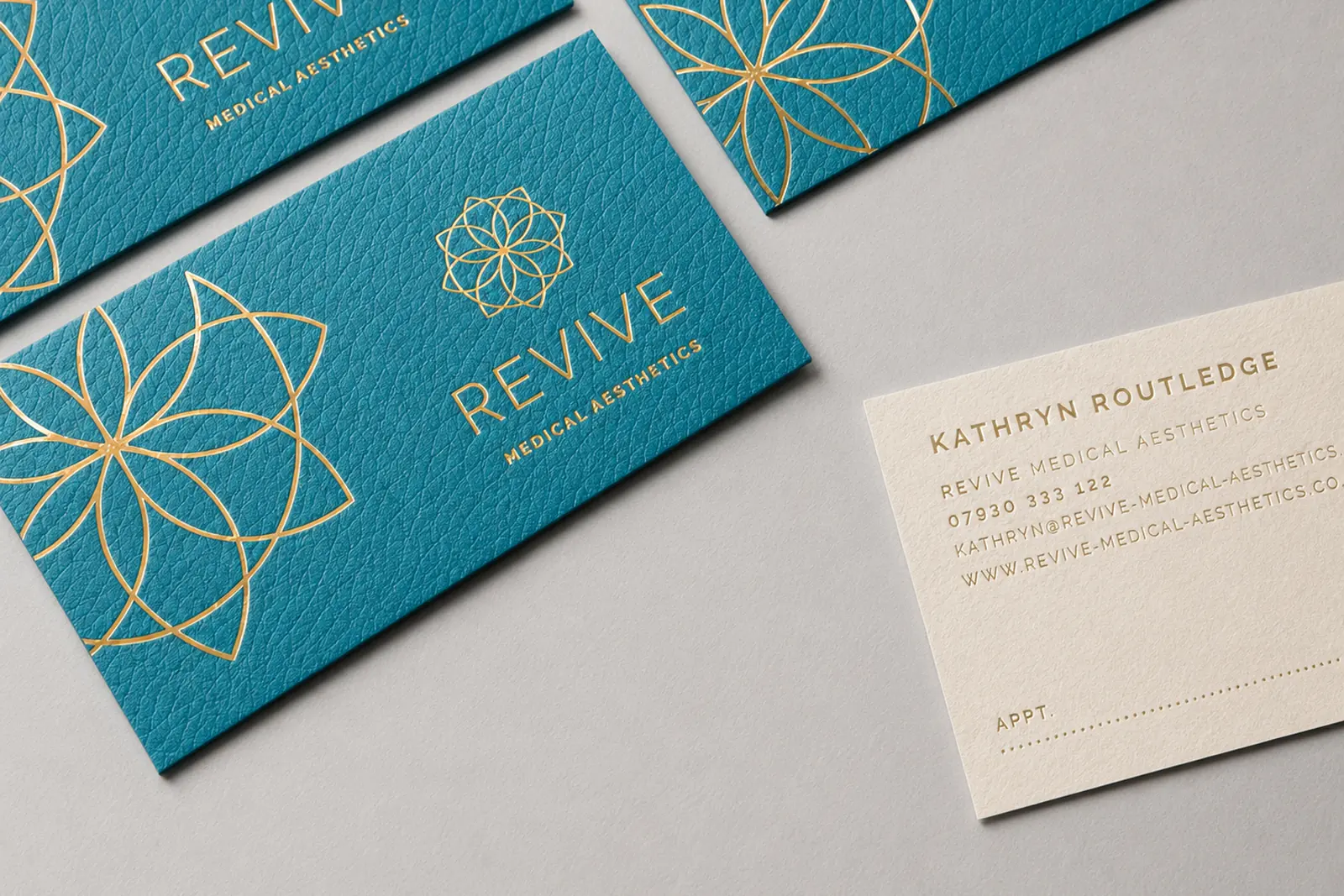
Foiled business cards are the most-ordered foil product we run. Foiling gold on Colorplan navy 350gsm is a standard for law firms and finance, whether you call it gold foiling, gold lettering, or foil hot print. Silver foil on textured cream for fashion. Copper or rose gold for restaurants and hospitality. Blind embossing with no ink or no foil for understated brand work. We duplex stocks to reach 600gsm and above, and we store traditional dies for three years, so reorders of identical cards are quicker and cheaper than the first run. Custom foil printing on cards has no minimum order on the digital press. See business cards for the full card range and finish combinations.
-
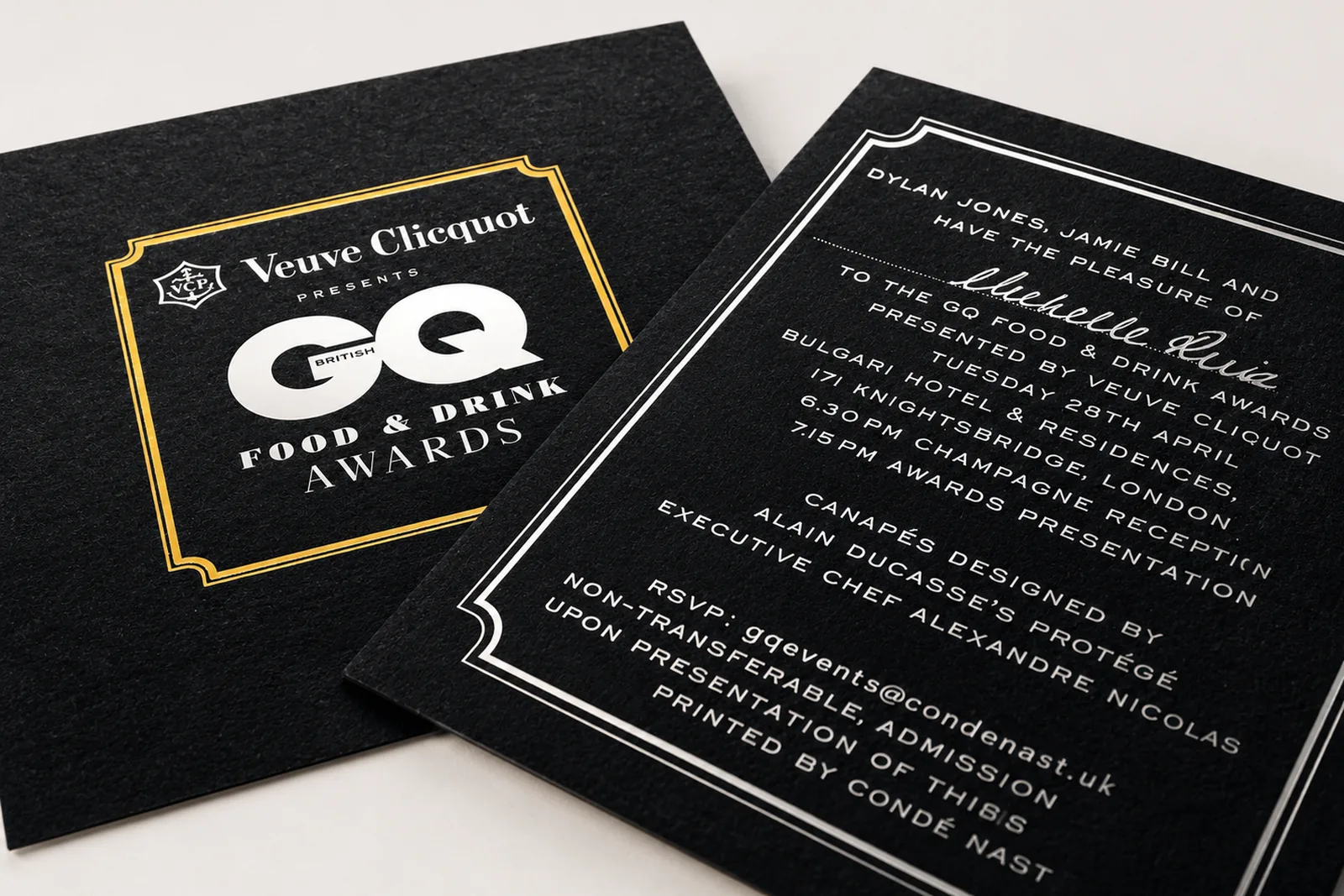
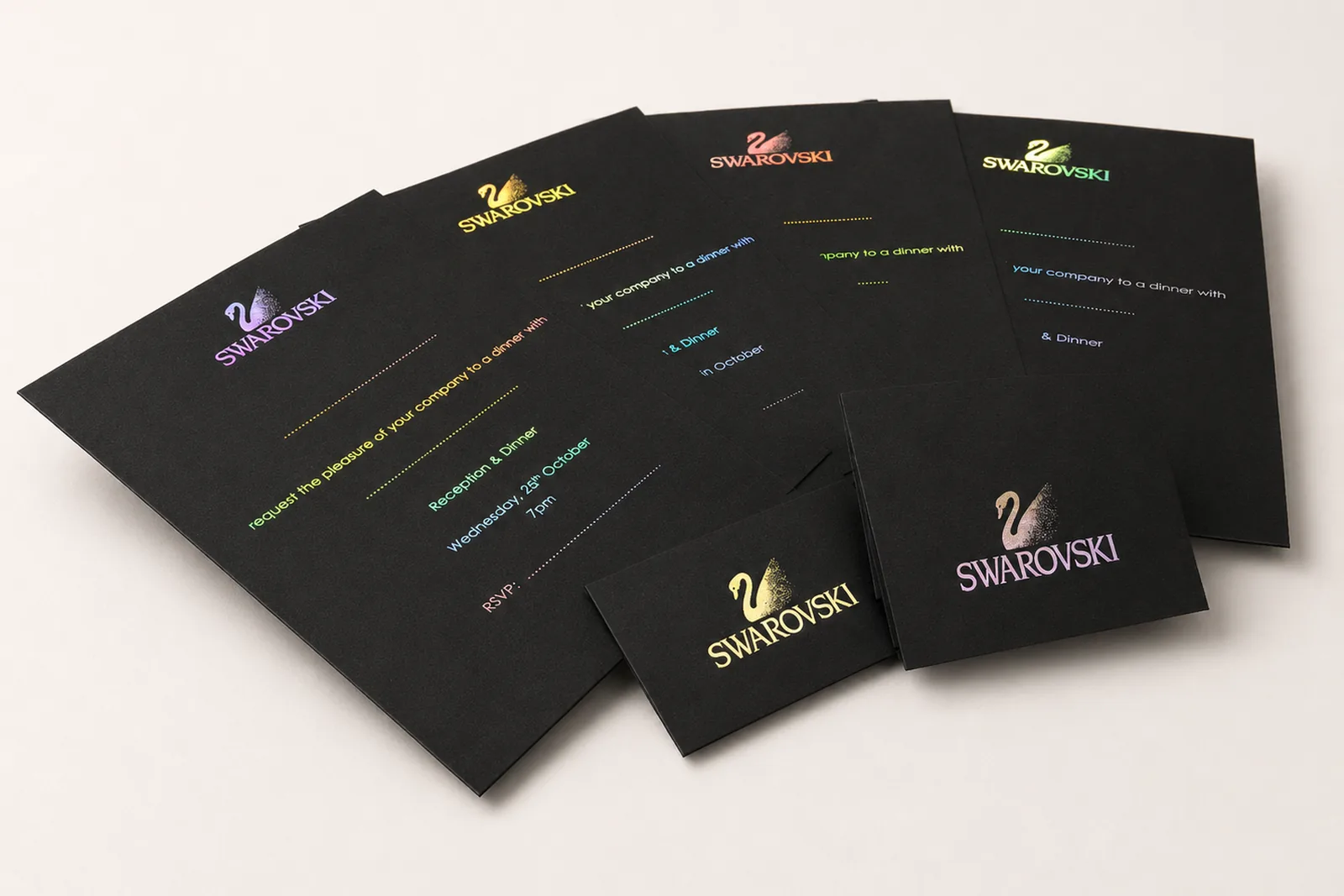
Foil-finished event print is a one-off run by definition: a single wedding, a single gala, a single conference, a single product launch. We produce foil-stamped invitations, embossed place cards, foil letterhead printing for welcome packs, gold-foil menus, copper-finished award certificates, and holographic security tickets. Peak wedding season runs March to June. Foil tickets carry holographic detail for security without needing a custom die, printed digitally on the Ricoh C7500. Card printing foil stamping for invitations and place cards combines easily with embossing and full-colour print. US event teams activating in London regularly use our Camden production hub for short-notice runs. For event signage at scale, see POS display.
Which foil and stock combination is right for your job?
Foil holds best on uncoated and soft-touch laminated stocks. We carry every common premium stock and run every foil colour that can be ordered.
We run every foil colour that can be ordered:
Gold: warm and cool tones, matte and high-shine, the most-requested finish.
Silver: bright silver, brushed silver, antique silver.
Copper and rose gold: warmer metallic tones for hospitality and beauty.
Holographic: rainbow, prismatic, and pattern holographics for tickets, packaging, and security work.
Neon: fluorescent pink, green, orange, yellow on the Ricoh C7500, short-run only, no die.
Black and white foil: matte black for subtle branding, white foil for dark stocks.
Clear gloss: spot-gloss effect via the Ricoh C7500, useful for tone-on-tone work.
Metallic foil printing in a continuous palette: chrome, brushed metallic, antique metallic, and Pantone-mixed metallic finishes for brand colour matching.
Pantone-matched and custom: specialty metallic finishes ordered to spec.
Toner foil on the Ricoh C7500 covers every colour above as a single-pass print, no die. The hybrid route (hot foil over digital toner) widens the foil colour range further because the ribbon is applied as a separate layer over the toner, with no minimum order. Traditional stamping covers the full range with a custom die for large repeat runs of 500 sheets and up on the hot foil press. Holographic foil printing and neon are short-run digital only. Cold foil, the offset-press inline method, is not part of our workflow; we are not the right fit for jobs that genuinely need it.
Foil holds best on uncoated and soft-touch laminated stocks. We carry premium stocks from:
Colorplan by GF Smith: 270gsm to 540gsm, full colour range, the standard for premium cards.
GF Smith specialty: textured, recycled, and coloured stocks.
Mohawk Superfine: ultra-smooth, white and eggshell, popular for letterheads.
Fedrigoni: Italian premium stocks for packaging and stationery.
Conqueror: classic bond and laid finishes for corporate identity.
Weight range runs 250gsm to 550gsm on the digital press, 600gsm and above by glue duplexing two sheets. Foil width up to 360mm covers business cards, A5 invitations, and most envelope sizes. Heavier stocks hold embossing better: 250gsm minimum for standard emboss printing, 300gsm for deep deboss work.
Embossing and debossing are surface-relief techniques, separate from foil but produced on the same finishing infrastructure at Camden. Both run as standalone work or in combination with any of the three foil methods.
Standard embossing: raised relief from a single-level brass die. 250gsm minimum stock, 300gsm preferred. Works on uncoated, soft-touch laminated, and most coated stocks.
Multi-level embossing: stepped or sculpted relief using a multi-level die for shadow and depth. Best on 350gsm and above uncoated.
Standard debossing: indented relief, same die system pressed in reverse. 300gsm recommended for deep deboss work.
Blind embossing: emboss with no ink, no foil, texture only. Reads best on uncoated stocks at 250gsm and above. Quiet, premium, often used for monograms and crests.
Foil-filled embossing: foil applied into the raised area for a metallic raised finish. Also called gold foil embossed printing when gold foil is used.
Foil-filled debossing: foil pressed into the indented area for a recessed metallic finish.
Combined emboss and deboss on the same piece: raised and recessed work on one sheet, common for stationery and luxury packaging.
Stock recommendations and emboss vs deboss comparison covered in the FAQ.
Lamination and surface coatings layer over (or under) foil to change the tactile feel of the finished piece. All run on the Camden finishing line.
Soft-touch laminate: matt velvet feel, slight darkening of underlying print, popular for premium business cards and presentation folders. Foil layers cleanly over the top.
Matt laminate: flat matt finish, more durable than soft-touch. Holds foil registration well.
Gloss laminate: high-shine finish, intensifies underlying colours, contrasts beautifully with matt or foil detail.
Spot UV: clear gloss coating applied only to specific artwork areas, creates tactile contrast against matt or soft-touch base. Pairs with foil for two-finish premium effect.
Spot matt over gloss laminate: inverse spot UV, creates the same contrast in the opposite direction.
Foil under laminate: foil applied first, laminate over the top. Brushed metallic effect, foil reads through with a softened catch.
Foil over laminate: laminate applied first, foil hot-stamped on top. Sharper foil catch, cleaner registration on coated surfaces.
Combinations are quoted by run length and pass count; most jobs finish in one or two passes through the line.
Foil layers over and under full-colour print without conflict. Standard combinations we run:
CMYK digital print plus foil: full-colour artwork with metallic detail on top.
Foil under soft-touch laminate: foil first, laminate over, brushed finish that catches light.
Foil and spot UV: tactile gloss next to metallic shine, both finished in-house.
Foil-filled emboss: foil applied into the embossed area for a raised metallic effect, also called gold foil embossed printing.
Foil-filled deboss: foil pressed into the indented area.
Blind embossing: no ink and no foil, texture only on uncoated paper at 250gsm minimum.
Hot foil over digital toner print: foil bonded to a digital-toner-printed base under heat, no die required. The foil sticks where the toner is. This hot foil printing route is the hybrid for short-run full-colour-plus-metallic jobs.
All combinations finish in a single production run. We do not split work between machines or suppliers.
We print to SRA3 (320 x 450mm) on the digital press and to B2 (500 x 707mm) where the job warrants traditional output. Digital foil has no minimum order: a single business card, a single invitation, a single presentation cover all run.
Traditional foil stamping printing typically starts to make sense at 500 sheets where the die cost amortises. We quote either method against your run length and recommend the cheaper option. Dies are stored for three years, so the second run is always faster. Cheap gold foil printing at very short runs is realistic on the digital press because there is no die or setup to recover.
Every finish combination, one production run
Foil with emboss. Foil with spot UV. Foil under soft-touch laminate. Hot foil over digital print. We do not split jobs between machines or suppliers.
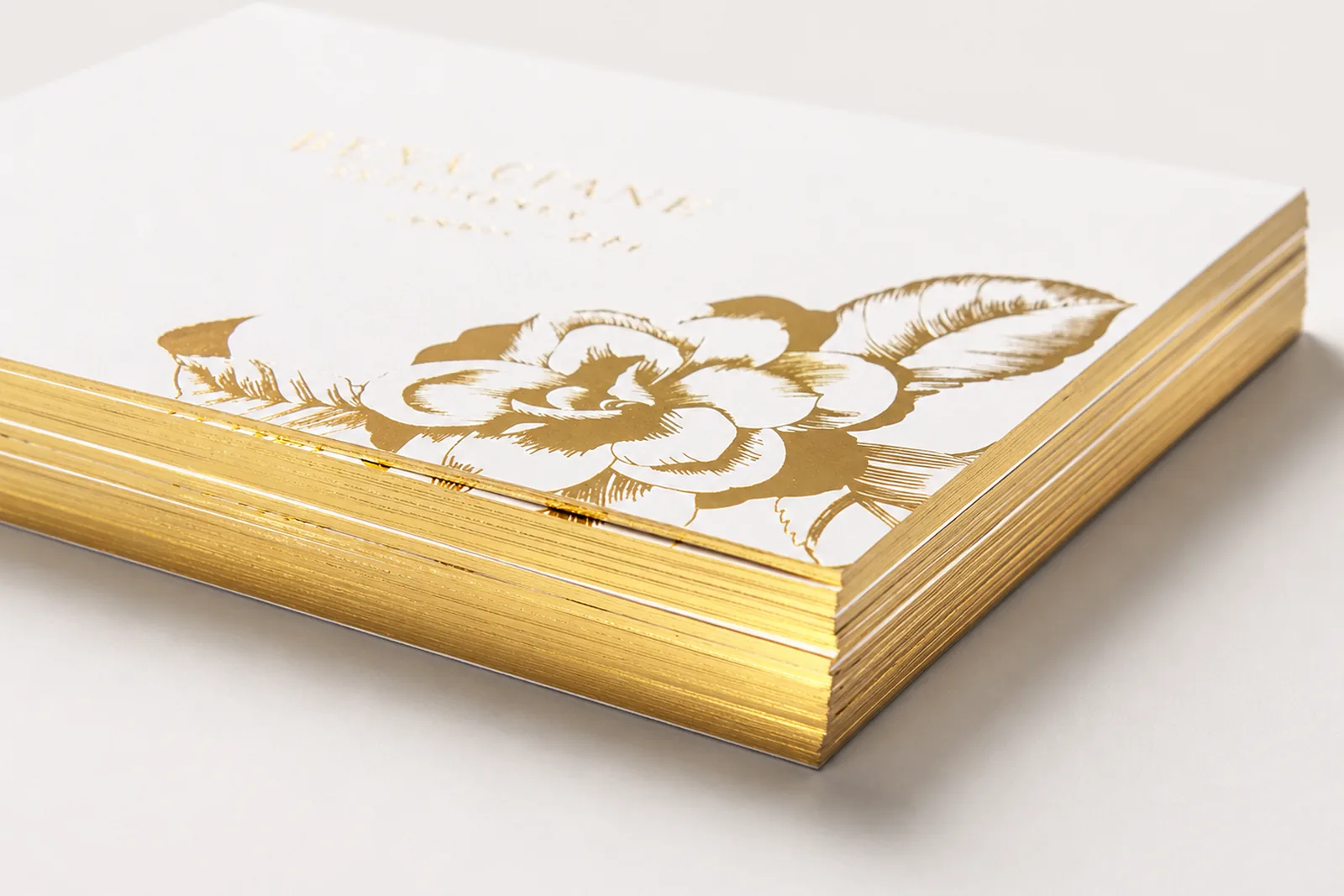
Our in-house finishing line at Camden runs every common foil and embossing combination on the same job ticket:
- Foil-filled embossing (foil and raised texture in one piece)
- Foil-filled debossing (foil pressed into the indent)
- Blind embossing (texture only, no ink or foil)
- Foil under soft-touch laminate (brushed metallic catch)
- Spot UV next to foil (tactile gloss meets metallic shine)
- Glue duplexing for 600gsm+ business cards and packaging
A debossed logo filled with gold foil, full-colour CMYK on the same sheet, and a soft-touch laminate over the top all arrive as one piece, finished in one production run.
For files that need foil-separation layers, our designers handle the artwork. Call 020 7874 1900 to walk through a complex finish combination or email your file to post@cityimages.co.uk.
How we produce your foil job
Send your file
PDF preferred. Email post@cityimages.co.uk or walk in. We check every file and handle foil separation layers if needed.
We specify
Digital or traditional, foil colour, stock, embossing or debossing, finishing. Right process for your run length and deadline.
Proof and produce
Walk in to see a proof on your actual stock, or approve by email. Same-day digital. 1-2 days for new traditional dies.
Collect or deliver
Walk in at Mayfair or Camden, same-day London courier, next-day tracked UK, international shipping to the US, EU, and global.
We hold 90% FSC-approved paper across our supply chain (Forest Stewardship Council International certified). Our 2029 Carbon Neutral commitment covers both studios. We partner with FirstMile Recycling for monthly waste reporting. Foil on paper is recyclable: the metallic layer is microscopically thin and clears standard paper recycling streams. Digital foiling produces virtually zero waste, no die, no chemical processing, no setup material. Traditional dies are stored three years and reused for repeat runs, so a regular reorder consumes no new tooling.
Frequently Asked Questions
Everything you need to know before placing an order. Cannot find your answer? We pick up the phone.
0 / 12 viewed
Call us directlyFoil printing bonds a thin metallic layer to paper or card using heat and pressure. City Images runs three methods in-house. Toner foil: metallic toner laid directly by the Ricoh C7500, no die, single-unit minimum, same-day. Hot foil over digital toner print (the hybrid): a digital toner base prints first, then a foil ribbon bonds over the toner under heat, no die required. Traditional die stamping, also called foil blocking or hot foil: a heated metal die presses foil ribbon onto stock, suited to large repeat runs. All three produce a permanent metallic finish in any colour.
Foil blocking, foil block, and hot foil blocking are the UK industry names for the same process more widely known as hot foil stamping: a heated metal die presses a thin metallic layer onto paper or card. UK terminology varies; the technique does not. We run it at Camden on a traditional hot foiling machine, store the die for three years so reorders skip the setup cost, and combine it with embossing, debossing, or full-colour foil print in a single production run.
This is the hybrid route, sometimes called digital foil printing with a separate foil-application pass. The Ricoh C7500 lays down a digital toner base first (CMYK, black, or a specific spot colour), and then a foil ribbon is applied over the toner under heat. The foil bonds only where the toner sits, in the exact shape of the printed artwork. No die is cut, no minimum order applies, and the range of foil ribbon colours is wider than the metallic toner range. This is the cleanest route when a job needs full-colour print plus a tight metallic detail on the same sheet, finished in one production pass, at any quantity from one upwards.
Gold foil applies a metallic gold layer to paper or card via any of the three methods. We run it digitally on the Ricoh C7500 for same-day jobs and short runs, as the hybrid for full-colour-plus-gold combinations, or with a traditional die for large orders. Gold is the most-requested colour, available in warm and cool tones, matte and high-shine, on Colorplan, GF Smith, Mohawk Superfine, Fedrigoni, and Conqueror stock.
No, cold foil is not one of our methods. Cold foil is an offset finishing process that runs inline on a sheet-fed offset press, using a UV-cured adhesive with the ribbon rolled on at room temperature. Hot processes, by contrast, use heat plus a metal die or a digital toner base. Our Camden studio runs three foil routes: toner foil on the Ricoh C7500, hot foil over digital toner print, and traditional die stamping. Cold foil makes sense above 50,000 sheets on thin label or carton stock; below that, one of our three methods produces the same visible result and works on a wider range of stocks. If your job genuinely needs cold foil, we will say so on the call and recommend a packaging-house specialist who can run it.
The finish quality is identical for most applications. Digital is more precise for fine detail and thin type, and it has no die cost, which makes short runs and single units economical. Traditional die stamping has a slightly different tactile quality from the die pressure that some clients prefer for formal work. We keep samples of both at our Mayfair studio for side-by-side comparison on your actual stock.
Embossing raises a design from the surface of the paper. Debossing presses it into the surface, creating an indentation. The question of emboss vs deboss, or embossed vs debossed, comes down to whether you want the design to stand proud or sit into the stock. Both need heavier stock to hold the impression: 250gsm minimum for embossed print and standard foil embossing work, 300gsm for deep deboss, and blind embossing paper at 250gsm-plus uncoated for texture-only finishes. Embossed printing and debossed work both combine with foil in a single production run, producing foil-filled emboss or foil-filled deboss; that combined finish, known as foil embossing, is one of the most-requested premium-card treatments. Embossing vs debossing is not a quality difference; it is a directional choice, and embossing and debossing run on the same in-house infrastructure as our printed foil and stamping lines.
We store traditional foil dies for up to three years. If you reorder the same design, we pull the existing die and run the job without new setup costs. This makes repeat foiled stationery, business cards, and packaging quicker and cheaper than the first run. The hybrid digital method requires no die at all, so reorders on that route never incur setup cost regardless of how long between runs.
There is no minimum on the digital methods (toner foil and the hybrid). We have produced single business cards, single invitations, and single presentation covers with metallic finishing. Traditional die-based work starts to make economic sense at around 500 sheets, where the die cost amortises across the run. Below that threshold we recommend a digital route. We will tell you which is cheaper for your specific run length before quoting, and we will explain the actual difference in finish so the decision is informed by what you will see and feel on the day. Re-runs on existing dies have no minimum because the die is already cut and stored.
Yes. US-based brands, agencies, and event teams use our Camden production hub regularly. Send the artwork by email, approve a proof remotely, and we ship finished work to a London address or directly to a venue. The time-zone difference works in your favour: a press-ready PDF sent from New York at end-of-day lands with us before our morning, which puts the job in production by early afternoon UK time. We do not charge an international handling fee on the production cost; only the courier line is added. Most US delivery lands within 2 to 3 business days via DHL or FedEx; we declare the parcel at production cost so commercial-value duty is calculated correctly at the receiving end.
Yes. Our in-house designers check every file before production and prepare separation layers, vector clean-up, colour matching against Pantone references, and bleed and crop adjustments. Most files arrive needing minor fixes. We do not charge for standard file prep on most jobs. If your artwork needs to be designed from a brief or rebuilt from scratch, we will quote the design time separately and confirm before starting. Common file fixes we handle without flagging: outlined text, image upscaling, spot-colour assignments, ink-coverage limits, and supplying ICC profiles for accurate proofing. Send the highest-resolution file you have, even if it is a working layout, and we will work back from there.
We quote every foil job individually because cost depends on the method (toner foil, hybrid, or traditional), foil colour, stock, run length, finishing combinations, and turnaround. There is no fixed price list because no two foil jobs are the same. Call 020 7495 0421 or email post@cityimages.co.uk with your spec. Most quotes come back within minutes. We accept payment by card, bank transfer, or trade account for repeat clients. New clients pay on collection or before international shipping.
Walk-In Collection
Two walk-in locations in Central London. Both open Monday to Friday. No appointment needed. Walk in to discuss a job face-to-face with the people producing it.
Email usMayfair
8 Avery Row, London W1K 4AL
Walk-in welcome. No appointment needed. Nearest stations: Bond Street, Oxford Circus, Green Park.
Walk in with your file and see foil samples on Colorplan, GF Smith, Mohawk Superfine, Fedrigoni, and Conqueror before you commit. Match gold, silver, copper, rose gold, holographic, and neon side by side on your actual stock. Same-day collection from 8 Avery Row on standard digital foil jobs sent in by early afternoon.
Camden
23-27 King's Terrace, London NW1 0JP
Walk-in welcome. No appointment needed. Nearest stations: Camden Town, Mornington Crescent.
Where the Ricoh C7500 metallic toner press, the traditional die-foiling machine, the embossing line, and the finishing room live. Digital and traditional foil, foil blocking, embossing, debossing, blind embossing, soft-touch laminate, spot UV, and duplexing all run from the Camden floor. International orders ship from here to the US, EU, and worldwide.